How to Paint Underwater Scenes: An Artist’s Journey Beneath the Surface
Painting underwater scenes becomes profoundly intimate when the human form enters the water. The body, suspended and transformed, becomes both subject and environment. Limbs soften, outlines dissolve, and movement slows into something dreamlike. Learning how to paint underwater scenes that include the human figure is less about anatomy and more about surrender—allowing water to reshape how we see the body itself.
When a figure is submerged, gravity loosens its hold. Hair floats, fabric drifts, skin reflects and absorbs color differently. The human form underwater is no longer rigid or grounded; it becomes part of the water’s rhythm. For an artist, this is where technical skill meets emotional interpretation.
This article explores how to paint underwater scenes with a focus on the human form—how light, color, distance, and movement affect bodies beneath the surface, and how to translate that experience into expressive artwork.
Understanding Light Beneath the Water (on the Human Form)
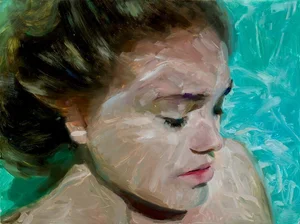
Light underwater does not simply illuminate the figure—it wraps around it. The human body becomes a soft reflector of light rather than a sharply defined object.
When painting figures underwater, notice how:
Light breaks across shoulders, arms, and faces unevenly
Highlights blur rather than sit cleanly on skin
Deeper water causes skin tones to cool and mute
Ultramarine blue is essential here. When mixed gently into skin tones, it immediately places the figure underwater. Titanium white should be used sparingly—softened and glazed rather than applied directly. A hint of burnt umber can anchor the form and prevent the figure from appearing ghostlike or flat.
Avoid harsh contrasts on the body. Underwater, even strong light feels diffused. Let highlights dissolve into surrounding color.
Choosing Colors for Underwater Figures
Painting the human form underwater requires rethinking traditional flesh tones. Skin is no longer painted “as skin” but as skin filtered through water.
As depth increases:
Warm tones fade quickly
Blues and blue-greens dominate
Whites turn pearly and translucent
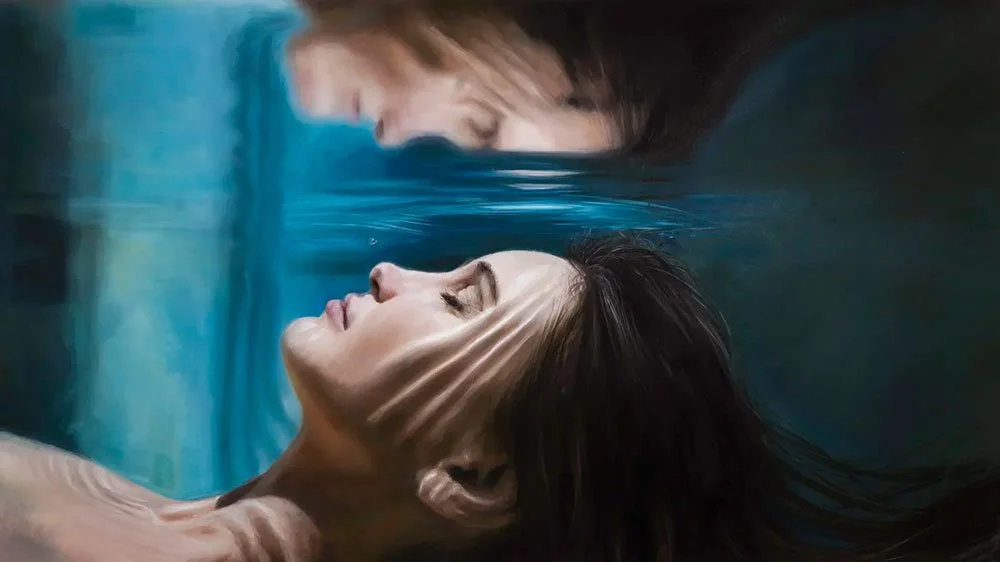
Instead of mixing perfect skin colors on the palette, build them gradually on the canvas. Start with cooler mid-tones, then glaze warmth selectively. This approach helps the figure feel submerged rather than floating on top of the water scene.
Remember: underwater color is relational. The body reflects surrounding blues, greens, and shadows. No color exists alone.
The Role of Distance and Depth
Distance underwater changes how the body reads. A nearby hand may feel solid and present, while a torso just behind it can already begin to blur.
For figures closer to the viewer:
Slightly stronger contrast
More defined edges (but still softened)
Clearer gestures
For figures farther away:
Reduced detail
Edges that dissolve into the background
Forms suggested rather than described
This is especially important when painting multiple figures underwater. Not every body needs equal clarity. Let depth decide what remains visible and what fades into suggestion.
Preparing the Canvas or Board
Before painting a submerged figure, prepare the surface with intention. A toned ground—soft blue, blue-grey, or neutral wash—instantly removes the shock of white and places the body in water from the very beginning.
Acrylic painters often benefit from a smooth board for glazing skin and water together, while canvas can be used when visible brushwork is part of the expression. What matters most is creating a surface that allows layering and adjustment without resistance.
Step-by-Step Process: How to Paint Underwater Scenes
1. Establish the Emotional Mood
Is the figure floating, sinking, resting, or moving? Underwater scenes with people are emotionally charged. Decide whether the feeling is calm, vulnerable, mysterious, or introspective.
2. Block in the Water First
Paint the water environment before refining the body. This ensures the figure feels embedded in the scene rather than placed on top of it.
3. Place the Figure as Shape
Think of the human form as shape and value, not anatomy. Block in the figure using broad areas of color without details.
4. Define Light Across the Body
Light underwater travels in gradients. Let light move across limbs and faces gently, breaking and softening as it goes.
5. Integrate the Figure with Water
Edges should blur. Allow water color to bleed into skin tones and vice versa. This integration is key to realism.
6. Glazing for Depth and Unity
Thin glazes of blue unify the figure and background. Glazing pushes parts of the body back into space and enhances the underwater atmosphere.
7. Refine Selectively
Choose one or two areas—perhaps a face, hand, or curve of the body—to bring slightly forward. Everything else can remain suggested.
8. Completion
Stop before the figure becomes over-defined. Underwater scenes lose power when overworked. Sign gently and let the painting breathe.
Brushwork and Techniques That Work Best
Soft brushes help create skin transitions, while flat brushes are excellent for flowing water movement around the body. A dry brush can suggest particles, bubbles, or subtle motion without distraction.
Avoid tight, controlled strokes everywhere. The human form underwater benefits from looseness—it should feel suspended, not constructed.
Painting the Human Form Without Over-Detailing
One of the biggest challenges in underwater figure painting is resisting detail. Muscles, facial features, and sharp outlines can quickly destroy the illusion.
Instead, suggest the body through:
Shifts in value
Gentle curves
Subtle highlights
Let the viewer complete the form in their mind. Underwater scenes are strongest when they invite participation rather than explain everything.
Bubbles, Surface, and Body Movement
Bubbles often indicate breath, struggle, or release. Use them intentionally and sparingly. A few translucent shapes near the face or hands are often enough.
Fabric, hair, and limbs should move slowly and rhythmically. Curved lines communicate water far better than straight ones. Even still figures should feel gently in motion.
Common Mistakes When Painting Underwater Figures
Some frequent challenges include:
Painting skin tones too warm
Over-outlining the body
Ignoring how water distorts anatomy
Making the figure too sharp compared to the environment

Each issue can be corrected by softening edges, glazing more water color over the figure, and stepping back to assess the overall harmony.
Learning Through Observation and Community
Observe swimmers, divers, and underwater photographs—not to copy, but to understand how bodies behave in water. Notice how posture changes, how weight seems to disappear, and how emotion becomes quieter.
Sharing your process with an art community, commenting on others’ work, and exchanging ideas can deepen your understanding of underwater figure painting. Growth often happens through dialogue.
Developing Your Own Underwater Style
Some artists paint underwater figures realistically; others move toward abstraction. Some focus on narrative, others on sensation. There is no single approach.
Your style emerges as you paint more bodies in water, experiment with color and glazing, and learn what feels true to you. Some paintings will feel easy, others tricky. Both are part of the journey.
For Beginners: Keep It Simple
If you’re new to painting underwater figures:
Use a limited color palette
Paint a single figure
Focus on light and movement rather than anatomy
Learning how to paint underwater scenes becomes enjoyable when pressure is removed and curiosity leads the process.
Final Reflections: Painting the Human Body in Water Is Painting Feeling
To paint the human form underwater is to paint vulnerability, release, and quiet transformation. The body becomes softer, more symbolic, and deeply emotional.
When you paint underwater scenes with figures, you are not just depicting water—you are exploring how humans exist within it. The process teaches restraint, sensitivity, and trust.
Let the water guide your brush. Let the figure dissolve and re-emerge. And allow the painting to reveal what lives beneath the surface, both in the water and within you.